- Erica T. Y. Leung,
- Cheuk-Lun Lee,
- Xinyi Tian,
- Kevin K. W. Lam,
- Raymond H. W. Li,
- Ernest H. Y. Ng,
- William S. B. Yeung &
- Philip C. N. Chiu
Nature Reviews Urology volume 19, pages16–36 (2022) Cite this article
- 4125 Accesses
- 71 Citations
- 13 Altmetric
- Metricsdetails
Abstract
Sperm selection in the female reproductive tract (FRT) is sophisticated. Only about 1,000 sperm out of millions in an ejaculate reach the fallopian tube and thus have a chance of fertilizing an oocyte. In assisted reproduction techniques, sperm are usually selected using their density or motility, characteristics that do not reflect their fertilization competence and, therefore, might result in failure to fertilize the oocyte. Although sperm processing in in vitro fertilization (IVF) and intrauterine insemination (IUI) bypasses many of the selection processes in the FRT, selection by the cumulus mass and the zona pellucida remain intact. By contrast, the direct injection of a sperm into an oocyte in intracytoplasmic sperm injection (ICSI) bypasses all natural selection barriers and, therefore, increases the risk of transferring paternal defects such as fragmented DNA and genomic abnormalities in sperm to the resulting child. Research into surrogate markers of fertilization potential and into simulating the natural sperm selection processes has progressed. However, methods of sperm isolation — such as hyaluronic acid-based selection and microfluidic isolation based on sperm tactic responses — use only one or two parameters and are not comparable with the multistep sperm selection processes naturally occurring within the FRT. Fertilization-competent sperm require a panel of molecules, including zona pellucida-binding proteins and ion channel proteins, that enable them to progress through the FRT to achieve fertilization. The optimal artificial sperm selection method will, therefore, probably need to use a multiparameter tool that incorporates the molecular signature of sperm with high fertilization potential, and their responses to external cues, within a microfluidic system that can replicate the physiological processes of the FRT in vitro.
Key points
- Conventional sperm selection methods use surrogate markers that do not reflect the fertilization competence of the selected sperm and might, therefore, result in fertilization failure.
- Current assisted reproductive techniques (ARTs) bypass many of the natural sperm selection processes in the female reproductive tract (FRT). In particular, intracytoplasmic sperm injection (ICSI) bypasses all the selection processes and thus has increased risk of transferring fragmented DNA and genomic defects in sperm to the resulting child.
- Multiple mechanisms to select the most fertilization-competent sperm have evolved within the FRT.
- Sperm need to have a panel of molecules that enable appropriate interactions within the FRT and the cumulus–oocyte complex at the fertilization site for selection.
- Sperm selection methods based on a single sperm characteristic or the simulation of one selection event in the reproductive tract are unlikely to be sufficient to isolate the most fertilization-competent sperm.
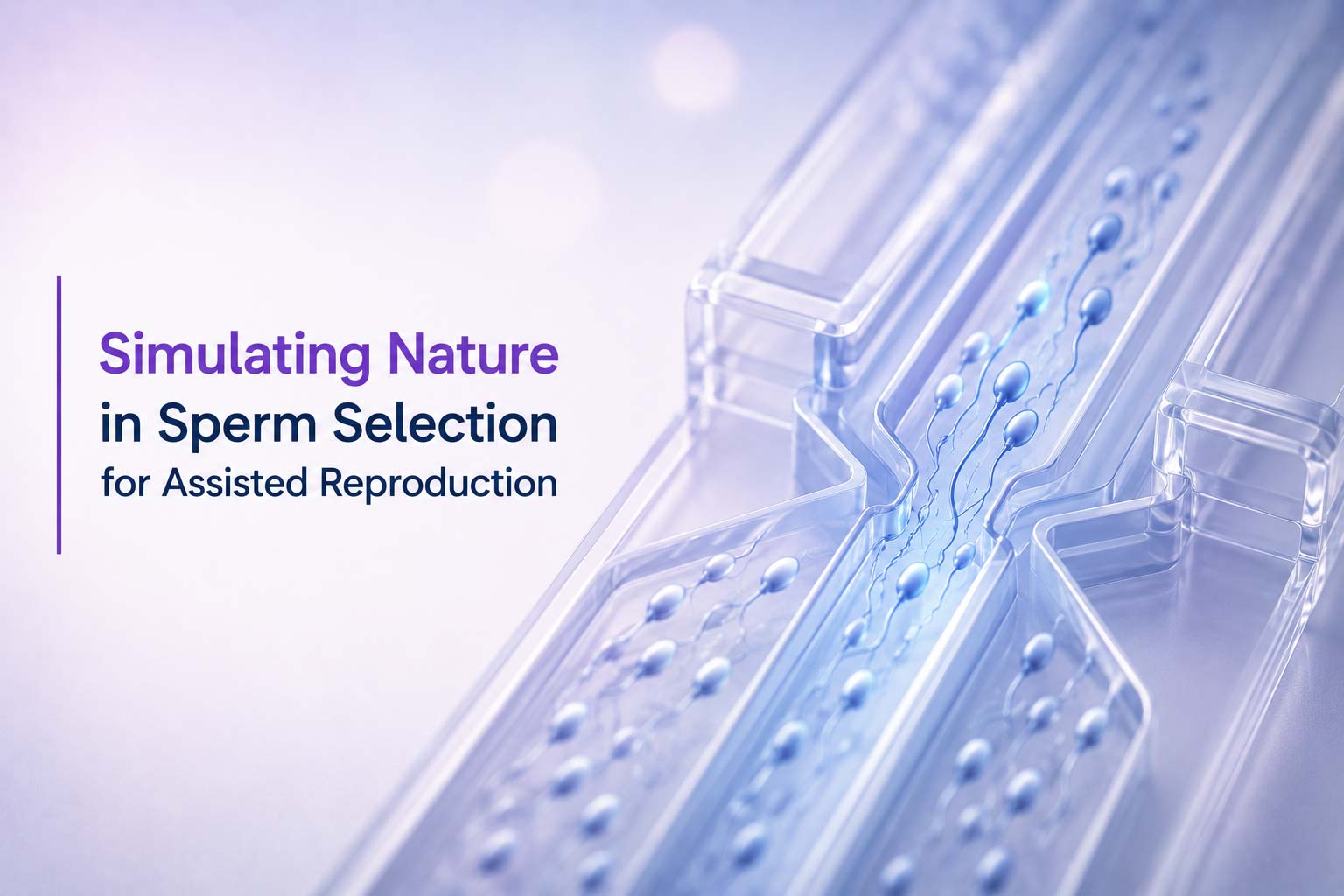
- A microfluidic system replicating the FRT using multiple selection mechanisms will probably be the optimal tool for selecting the most fertilization-competent sperm for an ART.