Lately, we hear one word more and more: Exosome.
But what is it really?
Is it a stem cell? A miracle treatment? Or just a trend?
Let’s explain it simply and honestly.
What Is an Exosome?
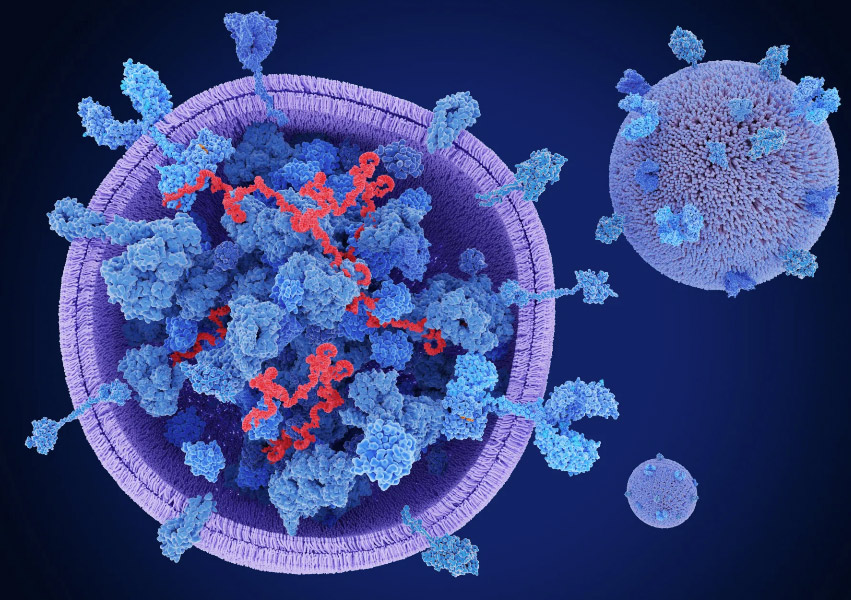
Exosomes are tiny messenger packages that cells send to each other.
You can think of them as the body’s biological “text messages”
Inside these packages are:
● proteins that support healing
● signals that help tissue repair
● molecules that reduce inflammation
● microRNAs that activate regeneration
So instead of putting a cell into the body, we use what the cell naturally releases to stimulate
healing.
Where Can Exosomes Be Used in Gynecology and Obstetrics?
Exosome therapy is not yet a routine treatment in all areas, but research and early clinical
experience show promising results in several fields:
🌸 1. Vaginal Tissue Regeneration
Used for:
● vaginal dryness
● menopausal vaginal atrophy
● postpartum tissue recovery
● loss of elasticity
Goal:
✨ healthier vaginal tissue
✨ better blood flow
✨ improved natural lubrication
🩸 2. Thin Endometrium & Implantation Problems (research stage)
In some women:
● the uterine lining does not thicken enough
● embryos have difficulty implanting
Exosomes may help by:
● supporting cell renewal
● making the uterine environment more receptive
This use is still under scientific investigation and is not a standard IVF treatment yet.
- Ovarian Function & Low Ovarian Reserve (research stage)
Some studies suggest that exosomes may:
● protect ovarian cells
● reduce cell death
● improve cellular activity
However:
📌 This is still experimental
📌 It is not a guaranteed fertility treatment
💗 4. Postpartum Tissue Healing
They may support:
● vaginal recovery after birth
● healing of stitches
● restoration of tissue elasticity
The aim is:
👉 faster healing
👉 stronger tissue structure
How Are Exosomes Produced?
Exosomes are usually obtained from:
● mesenchymal stem cells
● processed in laboratory conditions
● purified and sterilized
Quality is extremely important:
✔️ produced under GMP standards
✔️ sterile and tested
✔️ clearly defined source
✔️ approved by health authorities
Unfortunately, there are also:
❌ products with unclear content
❌ cosmetic-only marketing claims
❌ weak scientific background
That is why exosome therapy should only be performed by medical professionals.
Is Exosome Therapy Suitable for Everyone?
No.
It may NOT be suitable for:
● patients with active cancer
● unexplained vaginal bleeding
● pregnancy
● active infections
For this reason:
📌 medical evaluation
📌 detailed history
📌 proper examination
are essential before any application.
Is Exosome Therapy a Miracle?
No, it is not a miracle.
But it is:
✔️ a powerful tool in regenerative medicine
✔️ helpful in selected patients
✔️ meaningful when used correctly
Creating unrealistic expectations is never right.
Exosome therapy is a supportive treatment that aims to stimulate the body’s
own healing mechanisms. It is not a stem cell, not surgery, and not hormone
therapy. It works by sending regenerative signals to tissues.
In Conclusion
Exosomes:
🔹 may become an important part of future treatments
🔹 may support healing in certain gynecologic conditions
🔹 are being actively studied worldwide
But:
⚠️ they are not a cure for everything
⚠️ they are not suitable for every patient
⚠️ they must be used under medical supervision
We closely follow the scientific developments in this field and carefully evaluate exosome
therapy in appropriate patients and for appropriate indications 🤍
************************************************************************
Gynist IVF Clinic in Turkiye-İstanbul
Vali Konağı Caddesi.129 Milas Apartmanı Kat 5 Daire 13, 34363 Şişli/İstanbul
gynistivfclinic.com
https://www.instagram.com/gynistivfclinic/
+90 537 615 36 10
info@tulaycaglar.com